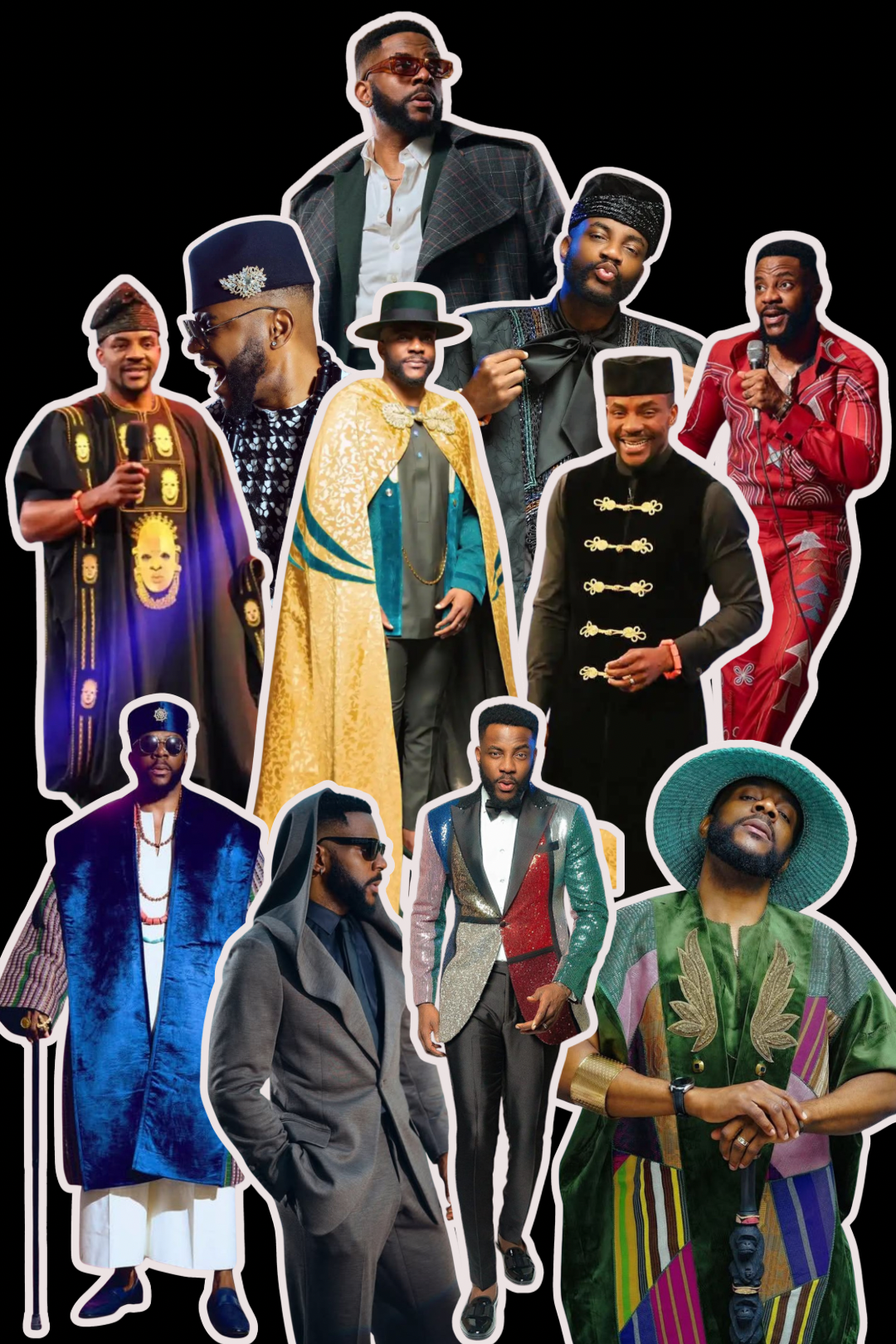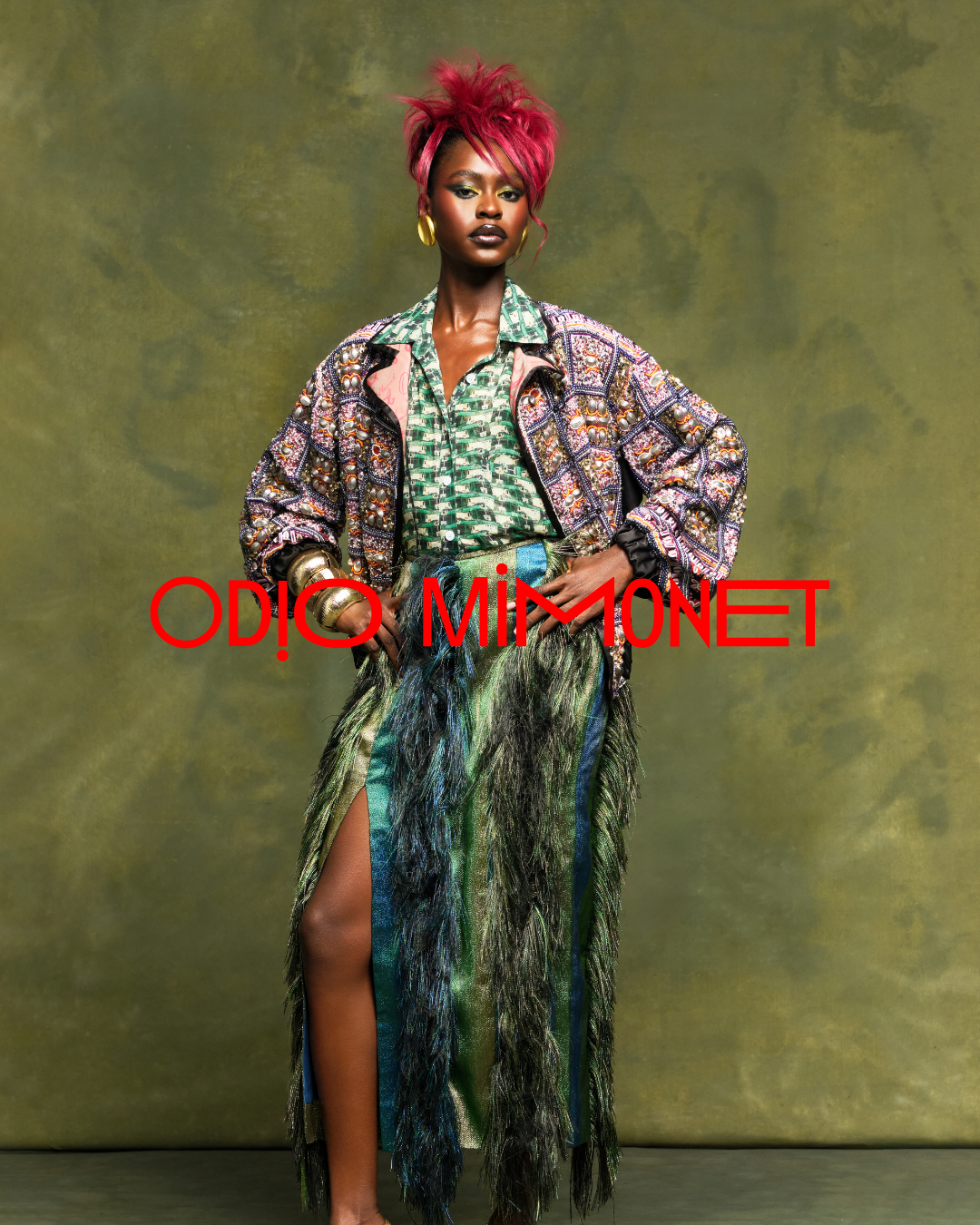

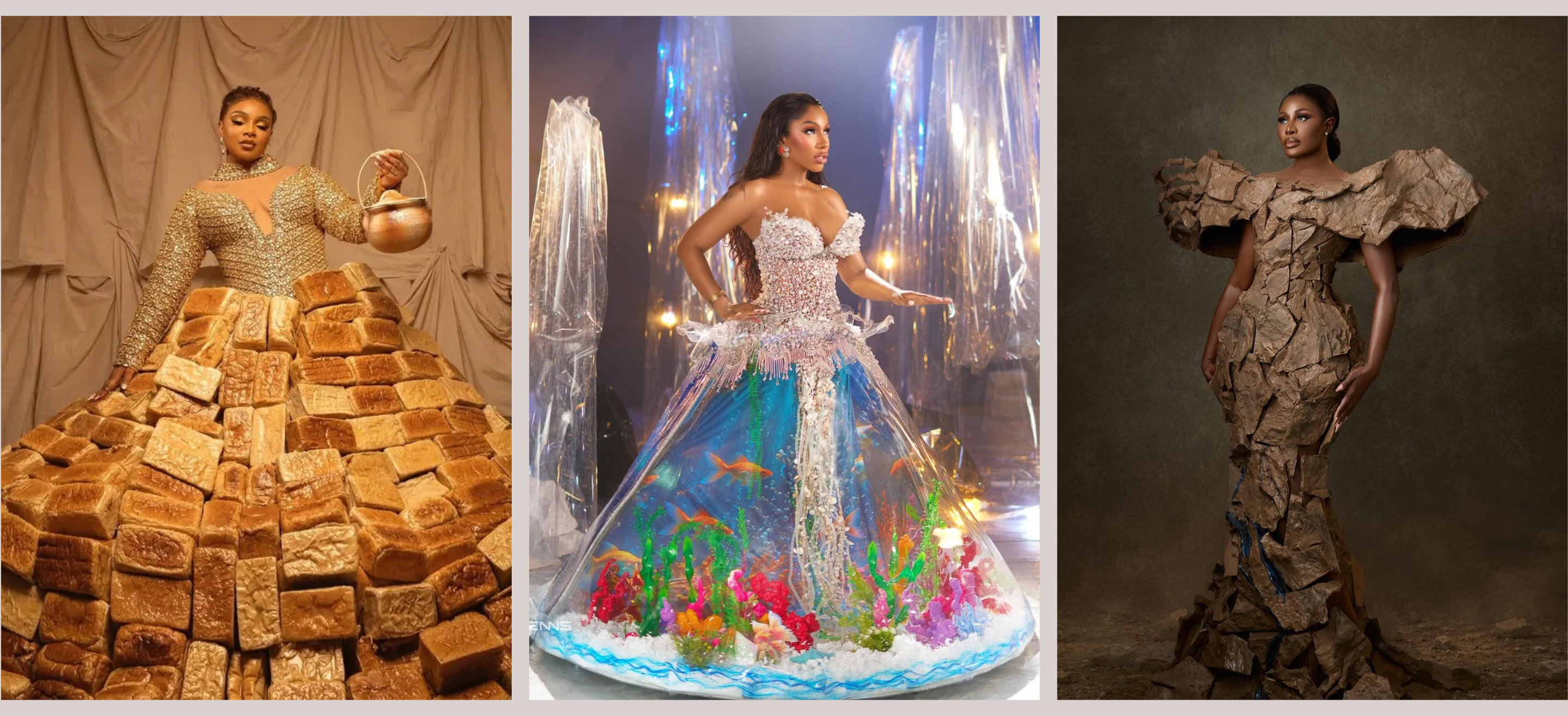
When the focus of a movie awards show is the fashion, and not the celebration and recognition of the cast and crew that put their blood, sweat and resources into their craft, can we say that the plot has been lost?
In recent times, the AMVCAs took a big shift from celebrating the movie stars and producers who worked hard to put together a body of work to people wearing outrageous outfits for the sole purpose of trending or outdoing their colleagues in the entertainment industry. The theme has been consistently ignored year after year, and conversations about the red carpet and its theatrics have gotten louder at home and abroad, while somehow, fanfare about the one thing that should be celebrated, the films, has gotten quieter. Sitting and cheering for the movies that got their deserved accolades felt strange as there were so many people asking “what movie is that” or “who is that” when an actor was announced. A lot of people walked away that night with the memory of the best dressed, of designs going viral, recalling gowns before performances, silhouettes before storytelling, and shock value before cinema.
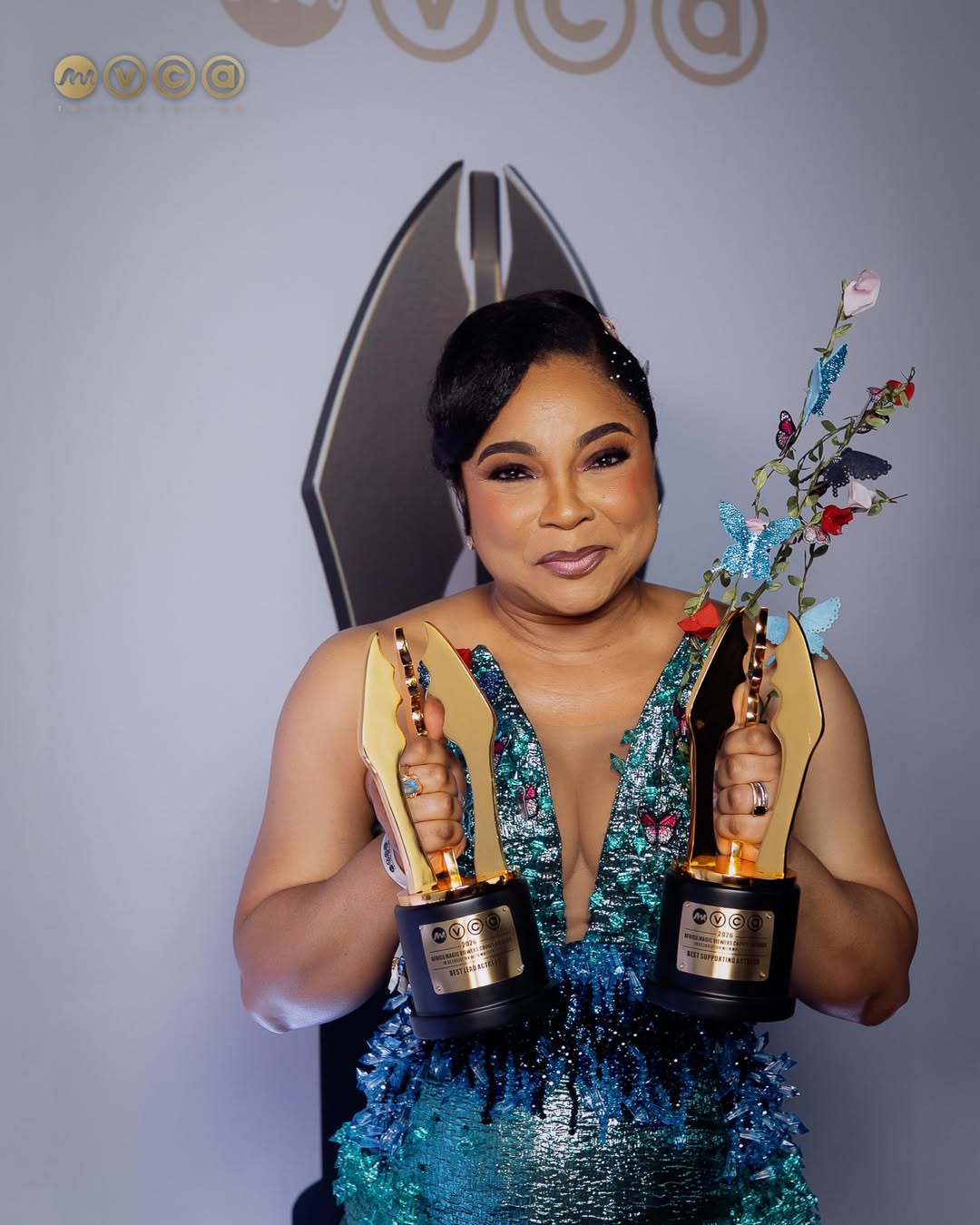
What still remains with me from that day is the general lack of understanding of Linda Ejiofor-Suleiman’s historic win as the first actress to win both Best Lead Actress and Best Supporting Actress in the same night for two of her best works yet. It is simple, they did not watch these films, but they will probably be able to remember that her dress was teal when she came up to take her awards. That in itself is a tragedy.
While so many can argue that fashion has always been an intricate part of film, it is important to note that it can be done tastefully and with intention because the truth is fashion absolutely belongs at the AMVCAs. For instance, Uzoamaka Power, who wore a wedding dress, and Andrew Yaw Bunting her co-star who wore a suit, mirroring their characters in their nominated short film Her Body, Gods Temple and also a nod to their film Call of My Life, which was premiering in cinemas the next day. Both outfits were done by designers who first care about craft rather than gimmick while still playing into the promotion of the actors' work. Both red carpet and studio images were identical, and craftsmanship, one of the themes of this years AMVCAs, was evident.
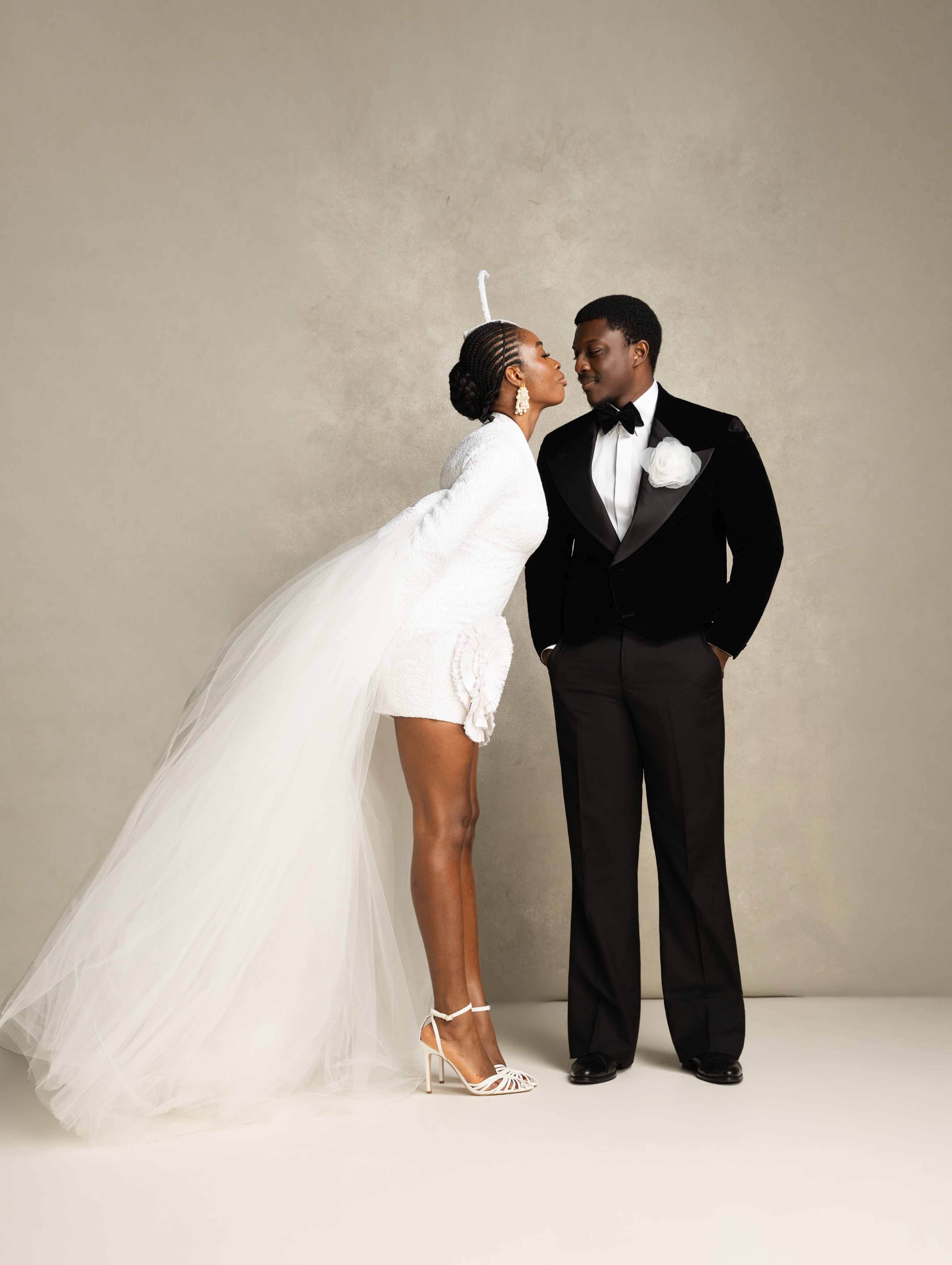
Film has always had a connection to fashion. Glamour has always had a home in cinema culture since the times of Marilyn Monroe, and costume is one of the greatest forms of storytelling. So this is not an argument about removing fashion from the core of the AMVCAs, rather I want to call into question why craftsmanship started losing ground, and why the goal of creating beautiful, intentional, personal designs got lost in creating the most talked about outfit in the room. Artsy and exaggeration are being mistaken for good, spectacle is replacing innovation and functionality, and, worst of all, the need for a dramatic concept is overshadowing poor tailoring, finishing, and lack of design depth.
Being avant-garde is not the issue either. Fashion has room to be experimental; in fact, it should challenge people. Conversations should be had around it, but there’s a difference between designing outfits that can be celebrated, reused or preserved, and dressing people up for internet reactions. A look can absolutely be dramatic and still be impeccably crafted. A design should stand the scrutiny of trained eyes, real cameras, unedited videos and red carpet lights. Media houses like Getty Images capture the precision of the outfit on the red carpet for a reason, how it moves while it’s worn or how it flows with the celebrity while they spin, to observe the details the designer intentionally put in for the world to appreciate. But at the AMVCAs what is seen on the red carpet is far from what is posted on social media. Presenting edited images and videos on the internet and then coming on the red carpet with outfits that have not been finished properly should be unacceptable.
Speaking of edited images, it is simply insulting to the designers who spend time and energy working with delicate materials and creating from scratch to use AI to reconstruct images and videos in studios and then present them to the world just for undeserved accolades and virality that last only a day or two.
Until Nigerian designers can create theatrical outfits without ignoring details and craft, we might need to sit out the high fashion conversation and comparisons with the MET Gala, which is a celebration of art and has a different purpose for existing. A memorable outfit is intentional, and intentionality is slowly disappearing from the Nigerian fashion scene. There are also conversations around AMVCA being the only place where designers get to showcase their work in this way, and how it is the equivalent of the MET Gala (again, ridiculous). However, I am of the opinion that it is false; in fact, Lagos Fashion Week is a fashion event that brings people to Nigeria from all over the world, and is a perfect time for creativity to be showcased.
AMVCA is still, at its core, a celebration of African film and television. That part matters the most. There is currently an imbalance and a culture shift we need to be careful about because while international designers, stylists and creators are now noticing the original designs created by designers here, we should always remember that for an award show about movies, fashion should elevate film and not eclipse it. Designers should go back to the foundation. Simple and elegant tailoring, fabric manipulation, silhouette construction, details and finishing and the most important one, storytelling through design, I don’t need to always see a video or how you came up with the design, let me ponder on it for a bit and feel all the feelings you want to communicate first. No distractions.
Craftsmanship will always age better than gimmickry, and that’s the conversation we should be having ahead of next year, not just whether fashion at the AMVCAs is too dramatic, but whether Nigerians still know how to recognize good design outside of spectacle.
The future of fashion at the AMVCAs does not need to make fashion smaller; it just needs to put film in its place, the centre, and remember fashion as art first and not just performance.
Great design does not beg for attention. It holds it.